Home Coaching The Benchmark About Location Resources Talk to Spence

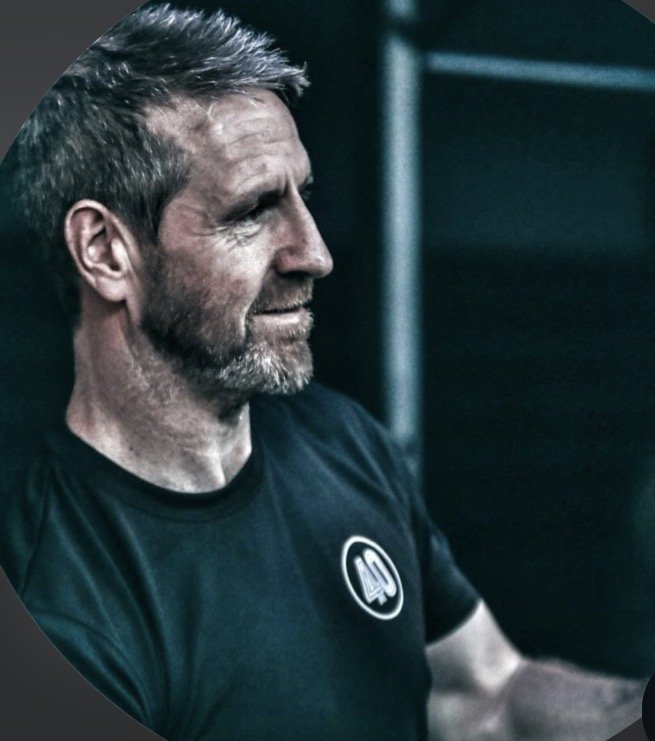
I'm Spence.

Twenty-plus years of coaching. A background that taught me the difference between comfortable and honest. Today I work 1:1 with people who want to get stronger, fitter and more capable, and use The Benchmark when proper measurement would help.

Spence, Not The Comfort Zone
20+ years coachingWorking with driven individuals across strength, performance and long-term physical capacity
Founder, Not The Comfort Zone1:1 coaching and objective assessment for people who want clarity, not more noise
Based at Waterside Village, LoughboroughAvailable on-location for corporate and sporting organisations across the UK

Not The
Comfort
Zone.

The name isn't a motivational slogan. It means something specific.

In 2002, I was in a bad place. Head, decisions, everything. The worst of them resulted in a car accident that killed my best friend.

I'm not going to go into the detail of that here. What I will say is that from that moment, everything changed. The life I'd had was gone, and so were most of the people in it. In November of that year I was sentenced to three and a half years in prison.

That broke me. Facing up to what I'd done, and the way it affected other people's lives, put me on my knees. But prison gives you a lot of time to think. Somewhere in that time, I started pouring myself into training. I enrolled on a Level 1 gym course. Became a gym orderly. On release, straight onto a PT qualification at college.

Twenty-three years on, I'm done glossing over the part of my life that actually created the trainer and the person I am. Your past doesn't define you. But it does build you. In my case, it drives everything.

I changed the course of my life because I had to. Not The Comfort Zone exists because of that.

"The name isn't about chasing discomfort for its own sake. It's about facing the things you'd rather not look at, and doing something about them." That's what Not The Comfort Zone is built around.

That background is part of why I coach the way I do today: less noise, more honesty, and a plan that has to work in real life.
How I
coach now.

Over twenty years of coaching, I kept seeing the same pattern. People training hard without a clear direction. People who had stopped because they did not know where to start again. People whose programme looked fine on paper but did not fit the rest of their life. They rarely needed more noise. They needed a coach who understood the whole picture.

It's not a dramatic collapse. It's quieter than that. You just become a bit less capable, a bit less sharp, a bit further from where you thought you'd be. And because it happens slowly, it's easy to not look at it.

Most people do not need more motivation. They need a sensible plan, honest feedback and somebody who notices early when the plan is not working. Sometimes that means weekly coaching. Sometimes it means measuring first. Often it is a bit of both.

The model is straightforward. Understand first. Prioritise what matters. Act. Review. Adjust. Measure when measurement adds something useful.

Physical capacity isn't just a performance metric. It's the platform everything else runs on: work, family, the ability to handle sustained pressure, and what happens when life puts something serious in front of you.

Cardiorespiratory fitness, muscle mass and metabolic health all influence outcomes. Not just quality of life, but how well your body handles whatever it faces.

Not guarantees. Not immortality. Just giving your body the best possible platform for life, and for whatever life throws at you.

The principles
behind NTCZ.

01
Understand First
Do not rush to a plan before understanding the person. Goals, training history, schedule, recovery, constraints and current capacity all matter. The Benchmark can add a deeper baseline when it is useful.
02
Right Hard Things
Hard work is rarely the missing ingredient. Misdirected hard work is. Coaching is about deciding where effort is most likely to pay off, then keeping it pointed there as life changes.
03
Honest Progress
Progress needs checking. Sometimes that is performance in training, sometimes body composition or fitness data, sometimes a Benchmark retest. Use the right evidence, not data for its own sake.

The comfort zone
isn't the sofa.

It's not knowing. It's the version of yourself you've quietly settled for. It's the gap between where you are and where you assumed you'd be, and the decision, every day, to not look at it directly.

Good coaching starts the same way: an honest look at where you are and what your life will actually support. Not dramatic. Not punishment. Just work that has a point.

Want to work
together?

Have a quick conversation with me. If coaching makes sense, I will explain it. If The Benchmark is the better starting point, I will say that instead.